End User Guide: Reporting Incidents in Wavity
End User Guide: Reporting Incidents in Wavity
- In Wavity, reporting an incident is simple, user-friendly, and accessible through multiple channels including the Wavity Platform, Customer Portal, AI Chatbot, Email, Slack, Microsoft Teams and Whats App.
- Note: The steps provided below are sample instructions and can be customized to suit specific organizational requirements; however, the core workflow remains consistent.
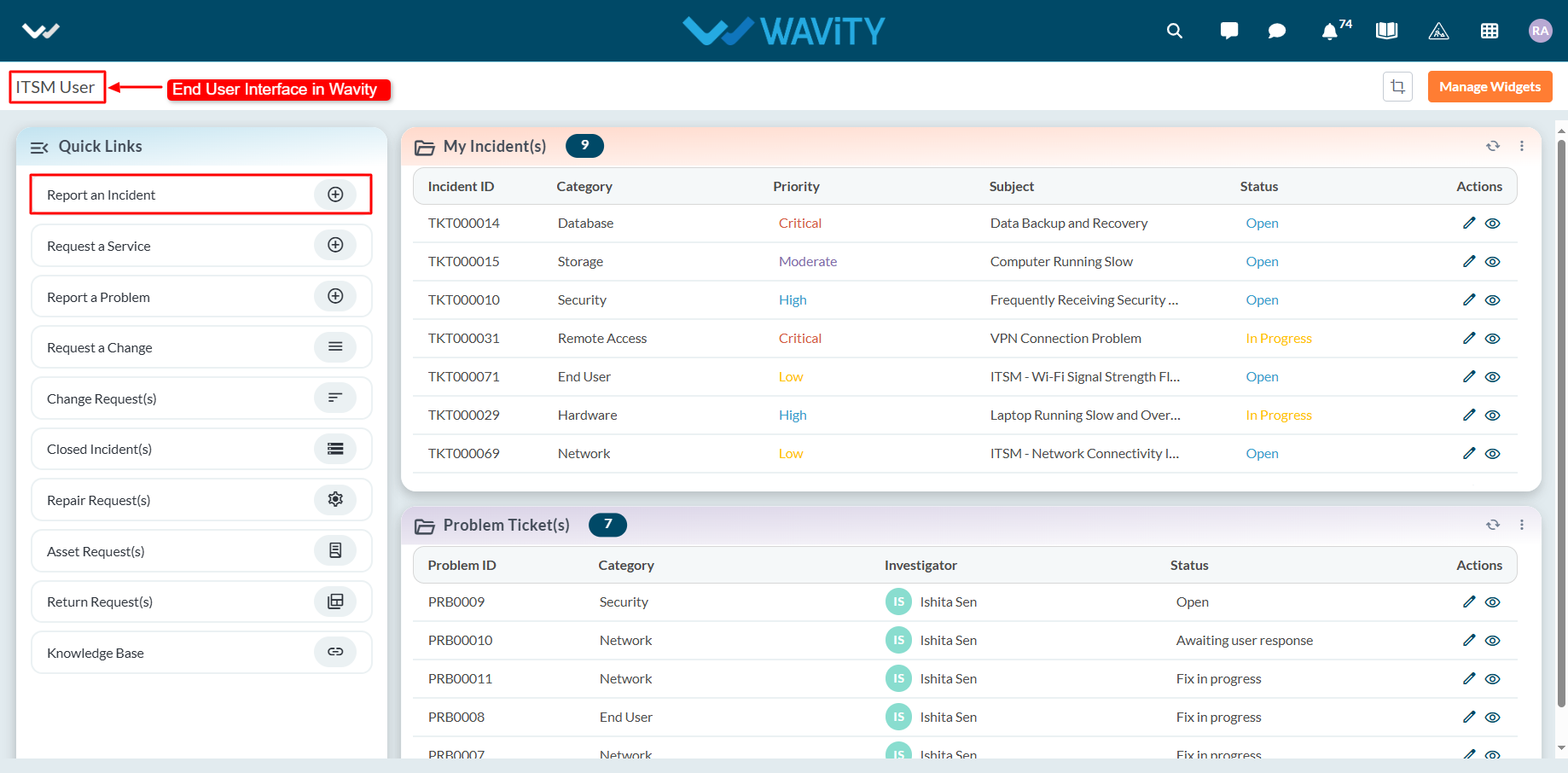
- Users can log in with their credentials on the Wavity platform, which will direct them to the End User Interface.
- From the Quick Links widget, users should click on ‘Report an Incident’ to initiate the process.
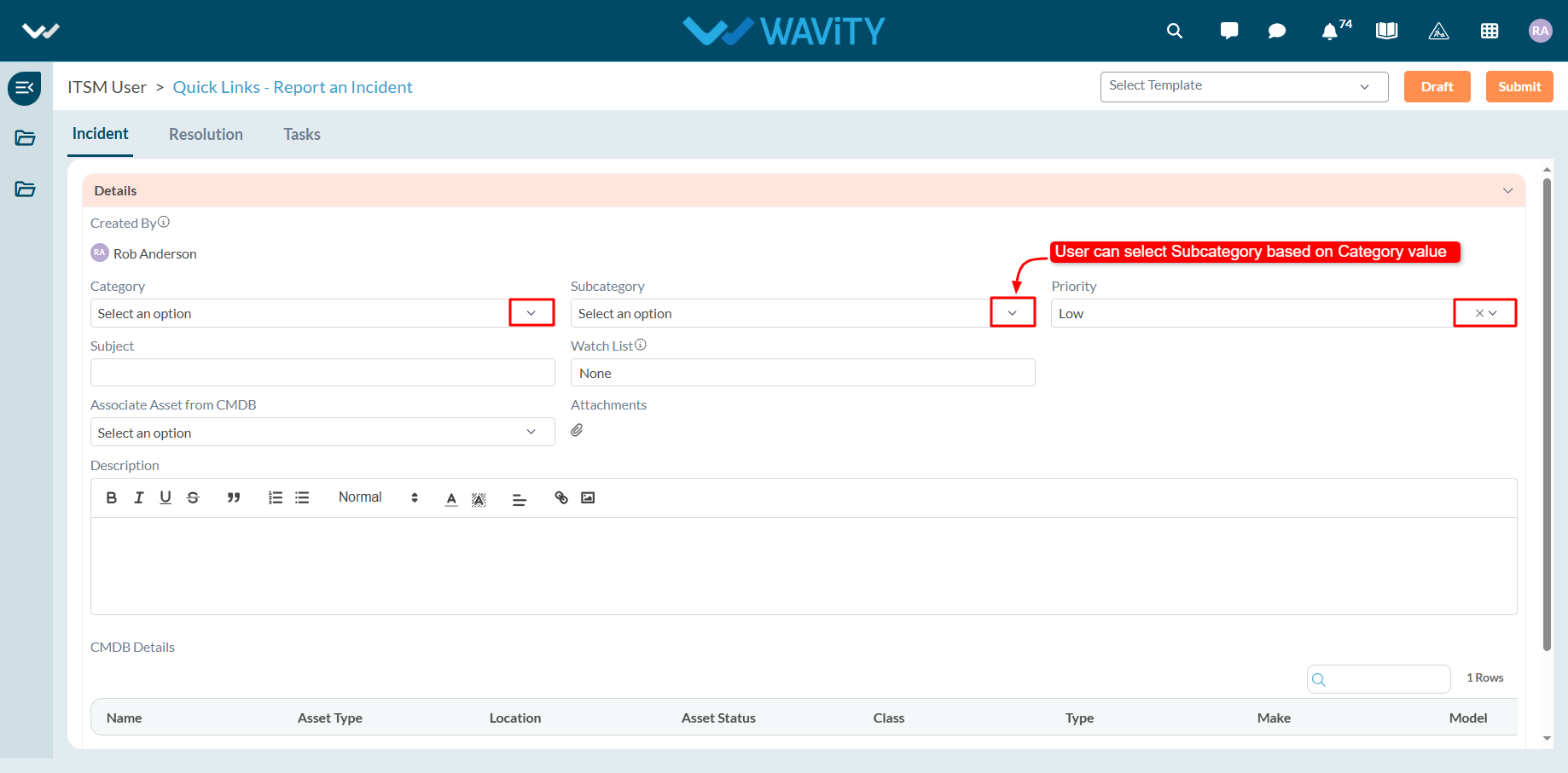
- Users can select the appropriate Category, Sub-category, and Priority from the dropdown menus.
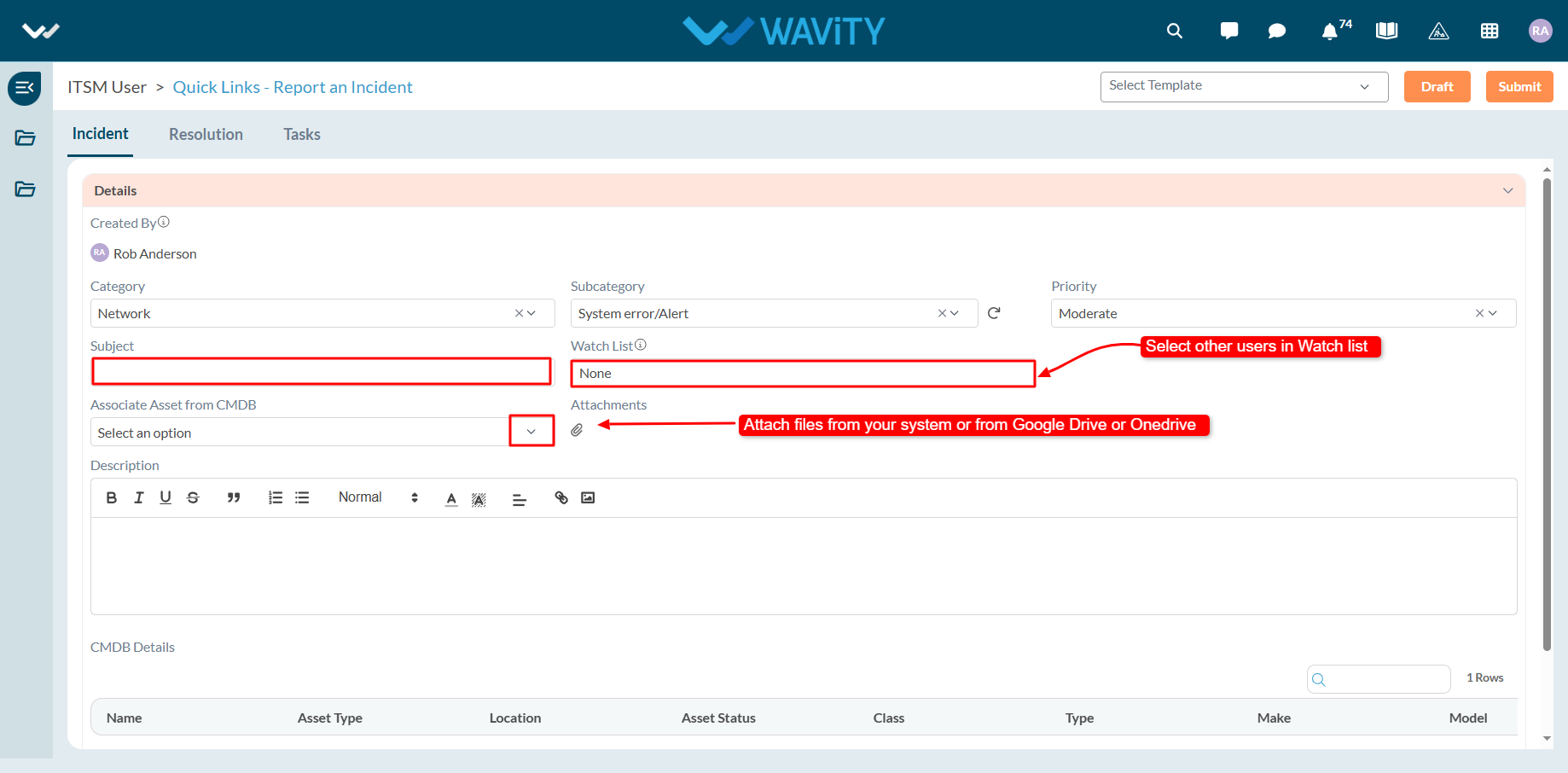
- A Subject line should be entered to briefly summarize the issue.
- Users may attach relevant files either from their local device or through Google Drive and OneDrive integration.
- Additional users can be added to the Watchlist, ensuring they receive notifications about updates on the incident.
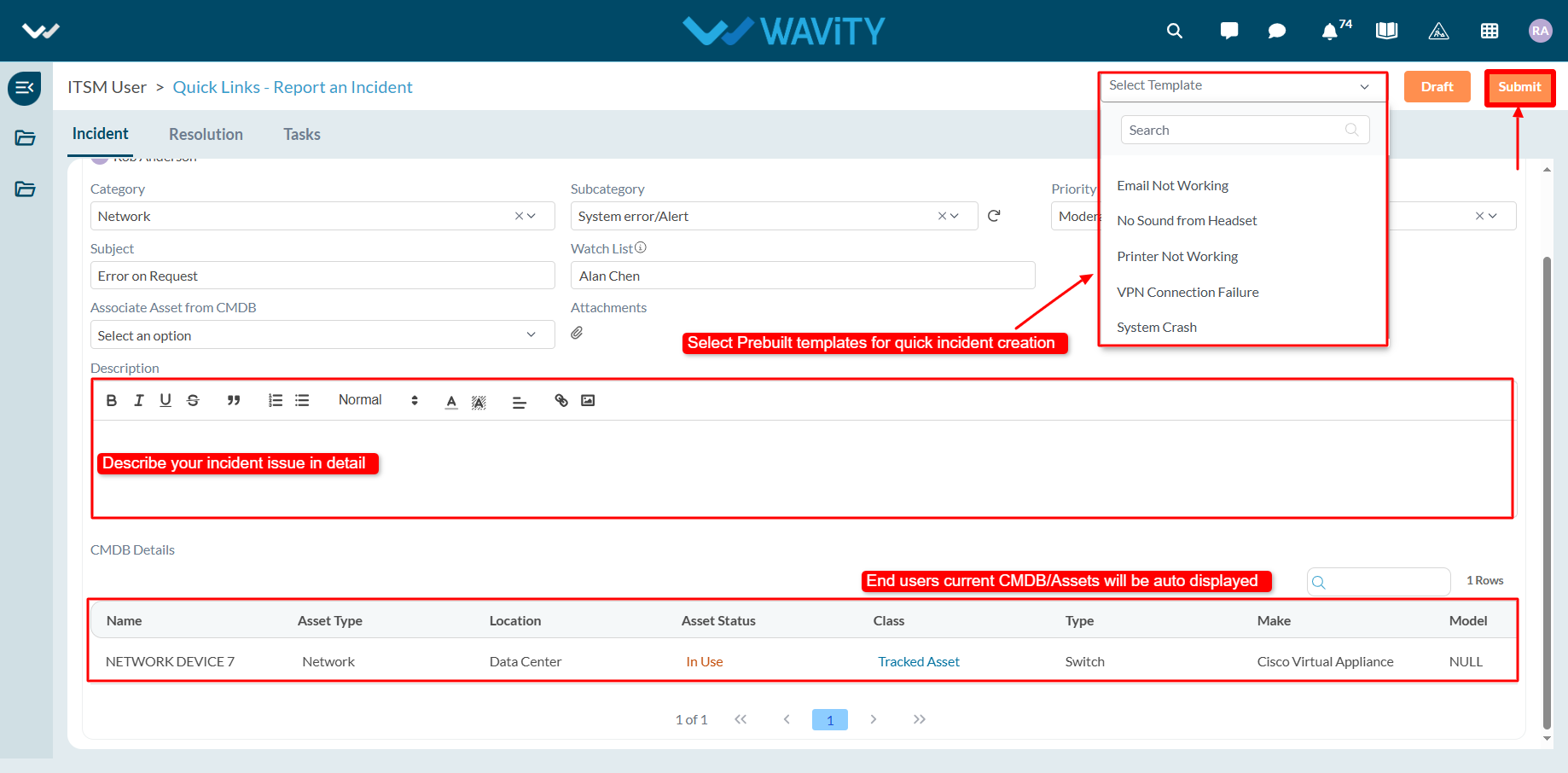
- A detailed explanation of the issue can be entered in the Description field.
- The CMDB/Asset currently in use by the user will be automatically displayed to provide context.
- Users can optionally use pre-built templates (which are customizable) to streamline the reporting process.
- After all details have been entered, users should click ‘Submit’ to log the incident.
- Upon submission, a confirmation email is sent to the user, and any subsequent updates to the incident will be automatically communicated via email.