Comparing IT Service Desk, IT Help Desk, and ITSM


Comparing IT Service Desk, IT Help Desk, and ITSM; What is the difference?
Tech words aren’t always easy to grasp. Keeping tabs on the essential processes, frameworks, tools, and acronyms can be a real challenge.
People often mix up three important terms: service desk, help desk, and ITSM (IT service management). And it’s important to know the difference between them. Because, using the correct term makes sure you're not underselling or overselling what your IT can do.
And it’s easy to mix them up if you’re a newbie into CX. So we’re here to help you understand those key differences.
What is ITSM?
ITSM, or IT service management, is how IT teams make sure you get top-notch IT services from start to finish. It's not just about basic support – it covers everything, from your laptop to crucial software. Think of IT delivered like a service.
ITSM has some key processes, which include:
- Service request management
- Knowledge management
- IT asset management
- Incident management
- Problem management
- Change management
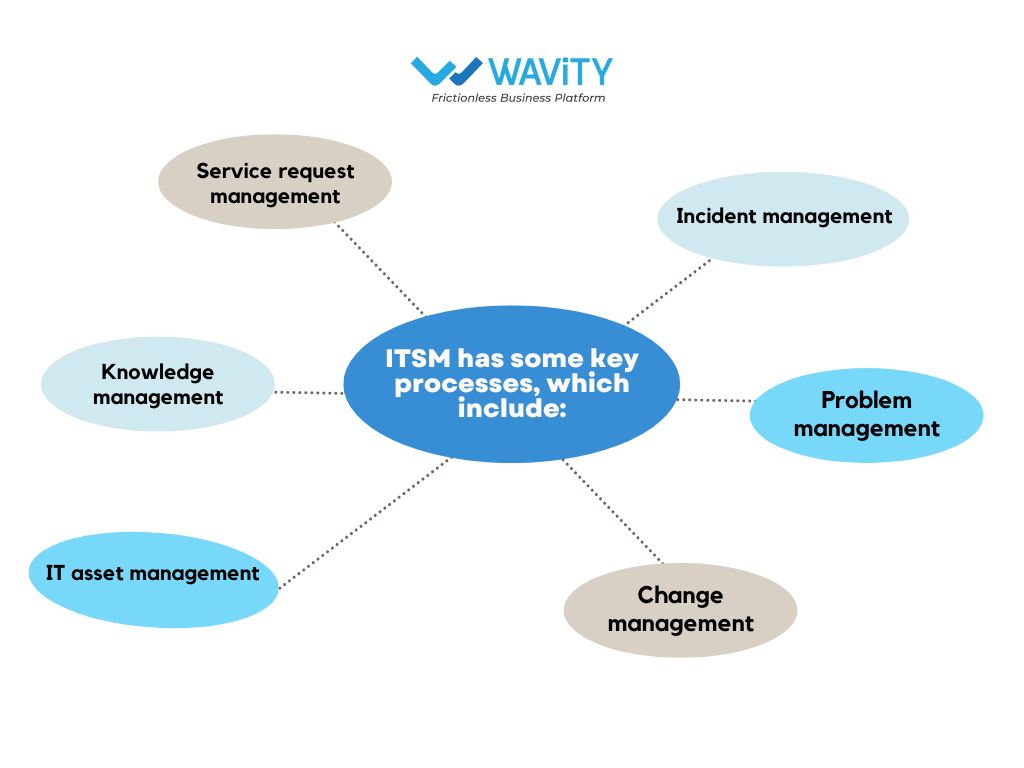
See, some of these, like IT assets and change management, go beyond everyday IT support. ITSM is like the big picture of delivering IT to businesses, while service desks and help desks focus on smaller bits of the bigger picture.
What is a Service Desk?
A service desk is like the go-to spot between you and the tech folks. In simpler terms, it's where you, as a customer (or an employee), get help from your IT service providers. Whether it's fixing a problem or fulfilling a request, the service desk is all about giving you great service fast.
Service desks do more than just that – they also handle things like managing requests, incidents, and knowledge. They link up with processes like problems and change management to keep everything running smoothly. So, when you think service desk, think robust, service-focused, and all about making your IT experience the best it can be.
What is a Help Desk?
Help desk is a crew of folks providing help for electronic or computer issues. Sounds pretty similar, right? But here's the key – the help desk is all about fixing issues, with a bit less focus on the customer. It's like a subset of the service desk, often honing in on incident management or fixing things.
To make it really simple, think of the help desk as software which is about fixing stuff, while the service desk goes beyond – it's the full-service experience with an extra dash of customer-centricity. If the difference still feels a bit perplexing still, no worries – we'll break it down for you below.
What’s the difference between Help Desk Vs Service Desk?
The help desk came first. Then the service desk emerged as a natural evolution from the traditional help desk, shaped by the ITSM best practices outlined in ITIL (formerly the IT Infrastructure Library). Its foundation lies in the fundamental idea of "managing IT as a service."
While the help desk originated from a focus on IT-centricity during the time of mainframe computing, the service desk blossomed with a customer-centric approach, aligning with ITIL's philosophy of delivering IT as a service. It may seem like a subtle distinction, but to many, a help desk provides help, while a service desk prioritizes delivering a comprehensive service experience to end users, emphasizing customer service.
Traditionally, a help desk is associated with break-fix tasks, identified in ITIL as incident management. In contrast, a service desk goes beyond break-fix, extending its support to service requests (such as requests for new services) and inquiries for information ("how do I do X?"). Although a help desk can potentially offer these additional capabilities, the trend in IT terminology tends to favor the broader scope encapsulated by the service desk.
Historically, a help desk was an augmentation to existing IT activities, whereas the service desk is an integral part of a service-based IT delivery and support ecosystem, structured around the concept of "the service lifecycle." This integration likely influenced the choice of the term "service desk" over "help desk" in the ITIL framework.
In the language of ITIL experts, a help desk is often considered tactical, focusing on immediate problem-solving, while a service desk is viewed as strategic, aligning with organizational goals. However, these distinctions can vary across different organizations.
Some argue that a help desk offers a subset of service desk capabilities or is considered limited in scope, reflected in statements like "the evolution of help desk to the service desk." Yet, it's essential to recognize that organizational preferences play a role, as evidenced by the diversity in IT support titles, with 41% opting for alternatives to both help desk and service desk.
For IT terminology, the terms help desk and service desk were once used interchangeably in the early 2000s. However, the key takeaway is this: for most, a "service desk" represents an advanced iteration of a help desk, molded within the framework of ITIL practices.
Put in the simplest of terms possible for Help Desk Vs Service Desk:
Service desks: Your go-to for fixing things with your company's technology.
Help desks: The place to get answers about your company's products or services, including help with IT issues.
What are the similarities between the help desk and service desk?
Both help desks and service desks share common ground by:
- Striving to enhance satisfaction for businesses and customers alike.
- Delivering swift support and fostering positive experiences.
- Saving users time through streamlined collaboration.
- Facilitating self-service for user empowerment.
- Empowering smarter decisions through analytics.
- Eliminating manual tasks to enhance overall efficiency.

Benefits of help desks and service desks
The benefits of Help Desks are as follows:
- Quick Solutions: Get speedy fixes for your immediate issues.
- User-Centric Care: Focused on making your experience better—addressing your concerns one by one.
- Task-Oriented Assistance: Need help? We'll handle your specific problems right when they pop up.
The benefits of Service Desks are as follows:
- Proactive Solutions: Works on long-term fixes to enhance your overall experience.
- Business-Centric Support: The aim is to help the whole company succeed—solving issues in line with big-picture goals.
- Streamlined Processes: Making things better for everyone. Helps improve how support works, step by step.
Some other benefits of both help desk and service desk are as follows:
- Help desks and service desks empower businesses with intelligent decision-making through data.
- Service and help desks enable end users to leverage self-service via a help center that contains informational articles and FAQ pages. The tools can also support employees with chatbots that can surface the most relevant help center content.
- Enhance end-user satisfaction with help desk and service desk tools. Connect with internal support seamlessly on preferred channels like Slack, Microsoft Teams, Google Meets, live chat, mobile, web, or a combination of these options.
- Improve organizational collaboration with help desks and service desks. These tools simplify request tracking and conversations by consolidating them on a unified platform.
- Save time for businesses by integrating multiple systems into a centralized platform. Streamline your workspace and tech stack to swiftly and efficiently address intricate interdepartmental requests.
Empowering Your Team with AI-Powered Service Desk and Help Desk Tools
If your team follows the service desk approach, selecting the right service desk software is important, serving as the bedrock of ITSM. The service desk acts as the bridge between customers and the IT team. Beyond essential features like knowledge management and reporting, a user-friendly and adaptable service desk solution is going to make a big difference. This ensures easy setup, promotes collaboration, and tailors itself to your requirements, enabling your IT team to provide swift and valuable support to the business.
Even for teams adopting the help desk approach, having a tool to track issues and their resolution is indispensable. A dedicated help desk tool fosters transparency, collaboration, and efficiency within your IT team.
It’s good to know that the shift from help desk to service desk, both in terminology and practice, underscores the increasing emphasis on service and strategy in IT. To embrace IT as a service, your team requires not only the right practices but also the right tools.
Discover how Wavity's AI-powered business software can elevate your ITSM capabilities.